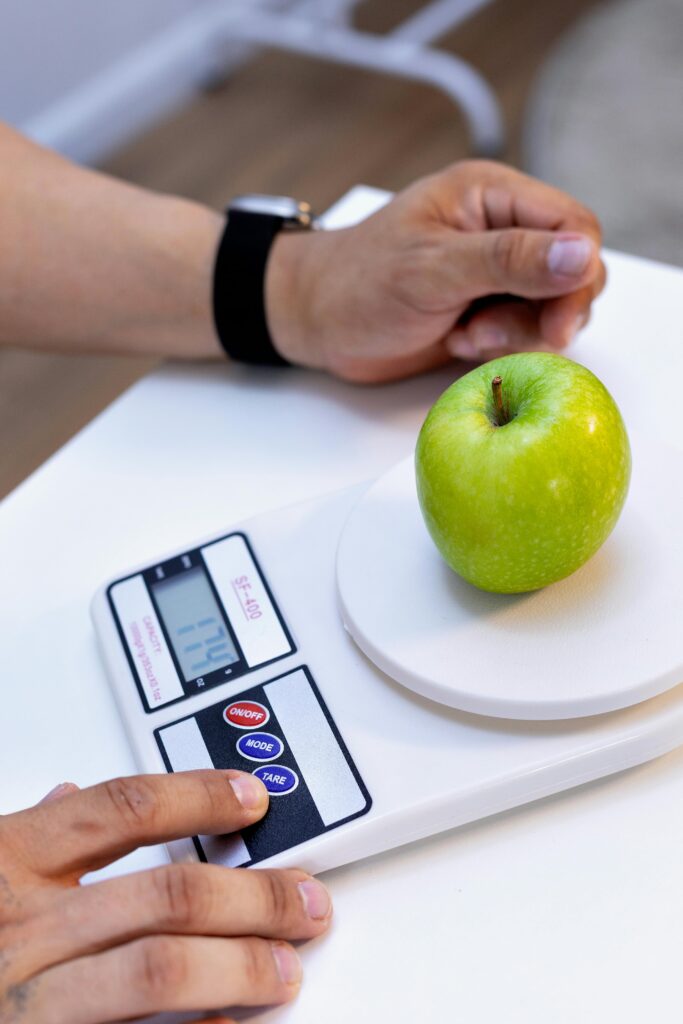
The Biggest Lie in Weight Loss
For decades, we’ve been told a simple formula:
Eat less. Move more. Count calories.
On the surface, it sounds logical. If you consume fewer calories than you burn, you should lose weight. That’s the foundation of nearly every mainstream diet, app, and fitness plan.
But here’s the uncomfortable truth:
If weight loss were truly about calories, most people wouldn’t struggle.
Millions of people track calories religiously… and still:
- Plateau
- Regain weight
- Feel constantly hungry
- Experience low energy
- Develop an unhealthy relationship with food
So what’s really going on?
The reality is this:
Weight loss is not about calories—it’s about how your body responds to what you eat.
Let’s break down what actually drives fat loss—and why the calorie myth keeps people stuck.
The Calorie Model Is Overly Simplistic
The traditional model treats your body like a math equation:
Calories In – Calories Out = Weight Change
But your body is not a calculator. It’s a complex hormonal system.
When you eat 500 calories of soda versus 500 calories of steak, your body does not treat them the same. Not even close.
Here’s why:
- Different foods trigger different hormones
- Hormones control fat storage and fat burning
- Your metabolism adapts based on what and how you eat
So while calories exist, they are not the driver—they are just a measurement.
Hormones Control Fat Loss (Not Calories)
The real key to weight loss is hormones—especially insulin.
Insulin: The Fat Storage Hormone
Insulin’s job is to:
- Move glucose (sugar) into your cells
- Store excess energy as fat
- Prevent fat burning when elevated
When insulin is high:
- Your body stores fat
- Fat burning is turned OFF
When insulin is low:
- Your body can access stored fat
- Fat burning is turned ON
This means:
You don’t gain weight because of calories—you gain weight because your body is in fat-storage mode.
Why You Can Eat Less and Still Not Lose Weight
Many people cut calories drastically and expect results.
Instead, they experience:
- Slower metabolism
- Increased hunger
- Fatigue
- Weight loss plateaus
Why?
Because your body adapts.
When you eat less:
- Your metabolism slows down to conserve energy
- Hormones increase hunger (ghrelin)
- Energy levels drop
Your body thinks it’s in survival mode.
So instead of burning fat, it holds onto it.
This is why calorie restriction often leads to:
- Short-term loss
- Long-term regain
The Real Problem: Blood Sugar Spikes
Highly processed foods—especially sugar and refined carbs—cause rapid spikes in blood sugar.
This leads to:
- High insulin release
- Fat storage
- Energy crashes
- Increased hunger shortly after eating
Think about it:
- You eat cereal or a bagel for breakfast
- You’re hungry again in 2–3 hours
- You snack, then repeat the cycle
This isn’t a willpower problem.
It’s a biological response.
Not All Calories Are Equal
Let’s compare two meals:
Meal A:
- 500 calories of soda and candy
Meal B:
- 500 calories of protein, healthy fats, and vegetables
Same calories. Completely different outcomes.
Meal A:
- Spikes blood sugar
- Raises insulin
- Promotes fat storage
- Leaves you hungry
Meal B:
- Stabilizes blood sugar
- Keeps insulin low
- Supports fat burning
- Keeps you full longer
So the question isn’t:
“How many calories?”
It’s:
“What is this food doing to my body?”
Hunger Is Not About Discipline
One of the biggest myths is that weight loss is about willpower.
It’s not.
Hunger is controlled by hormones like:
- Ghrelin (hunger hormone)
- Leptin (fullness hormone)
When you eat the wrong types of foods:
- Ghrelin increases → you feel hungrier
- Leptin signaling weakens → you don’t feel full
This creates a cycle:
Eat → spike → crash → hunger → repeat
So people blame themselves…
But it’s actually a hormonal loop driven by food choices.
Why Diets Fail (Even When Calories Are Low)
Most diets focus on:
- Cutting calories
- Increasing exercise
- Restricting food
But they ignore:
- Hormonal balance
- Nutrient quality
- Blood sugar stability
This leads to:
- Temporary weight loss
- Muscle loss instead of fat loss
- Metabolic slowdown
- Rebound weight gain
That’s why people say:
“I lost 20 pounds… then gained 30 back.”
It’s not failure—it’s bad strategy.
What Actually Works for Weight Loss
If calories aren’t the main factor, what is?
1. Stabilizing Blood Sugar
Focus on foods that don’t spike insulin:
- Protein (chicken, fish, eggs)
- Healthy fats (avocado, olive oil)
- Fiber-rich vegetables
Avoid:
- Sugar
- Refined carbs
- Ultra-processed foods
2. Prioritizing Protein
Protein:
- Reduces hunger
- Supports muscle
- Increases metabolism
When you eat enough protein, your body naturally:
- Eats less without trying
- Burns more fat
3. Reducing Insulin Spikes
This can be done by:
- Eating fewer processed carbs
- Spacing out meals (no constant snacking)
- Trying intermittent fasting (if appropriate)
Lower insulin = easier fat burning
4. Healing Your Metabolism
Instead of starving your body:
- Eat nutrient-dense foods
- Avoid extreme calorie restriction
- Get enough sleep
- Manage stress
Your metabolism is not broken—it’s responding to your environment.
5. Focusing on Food Quality Over Quantity
Ask:
- Is this food natural or processed?
- Does it nourish or spike my system?
- Will it keep me full or make me crave more?
When you focus on quality, calories often regulate naturally.
The Role of Exercise (It’s Not What You Think)
Exercise is important—but not for burning calories.
In fact:
- You burn relatively few calories during workouts
- It’s easy to “eat back” those calories
Exercise is powerful because it:
- Improves insulin sensitivity
- Builds muscle (which increases metabolism)
- Supports mental health
So yes—exercise matters.
But it’s not the main driver of weight loss.
The Psychological Trap of Calorie Counting
Calorie counting often leads to:
- Obsession with numbers
- Guilt around food
- Disconnection from hunger signals
People stop asking:
“Am I actually hungry?”
And start asking:
“Do I have calories left?”
This creates a toxic relationship with food.
True long-term success comes from:
- Understanding your body
- Eating intuitively (once balanced)
- Choosing foods that support your biology
Why Some People “Eat Anything” and Stay Lean
We all know someone who:
- Eats freely
- Doesn’t track calories
- Stays naturally lean
Why?
It’s not luck.
They often have:
- Better insulin sensitivity
- Balanced hormones
- Eating patterns that don’t spike blood sugar constantly
Meanwhile, someone else can:
- Eat less
- Exercise more
- Still struggle
Because their body is in fat-storage mode.
The Truth About Sustainable Weight Loss
Sustainable weight loss is not about:
- Eating less forever
- Cutting out everything you enjoy
- Tracking every calorie
It’s about:
- Eating in a way that supports your hormones
- Reducing hunger naturally
- Allowing your body to access stored fat
When you do this:
- Weight loss becomes easier
- Energy increases
- Cravings decrease
A Better Way Forward
Instead of asking:
“How can I eat fewer calories?”
Start asking:
- How can I balance my blood sugar?
- How can I reduce insulin spikes?
- How can I nourish my body?
- How can I feel full and energized?
This shift changes everything.
What Scientific Research Actually Says About Calories, Weight Loss, and Metabolism
While popular fitness culture often reduces weight loss to “calories in vs calories out,” decades of medical research show a far more complex reality involving hormones, metabolism, and biological adaptation.
1. Calories Matter — But They Don’t Work in Isolation
Peer-reviewed research confirms that calorie intake does affect body weight in the short term. However, studies also show that the body does not respond to calorie restriction in a linear or predictable way.
A major review published in JAMA Internal Medicine explains that the widely accepted “calories in, calories out” model is incomplete and that obesity is strongly influenced by hormonal responses to food—especially insulin, which regulates fat storage and hunger signaling.
In other words, two diets with identical calories can produce very different metabolic outcomes depending on macronutrient composition and hormonal response.
2. Metabolic Adaptation: The Body Resists Weight Loss
One of the most consistent findings in obesity research is metabolic adaptation—the body actively slows energy expenditure when calorie intake drops.
A scientific review in Experimental Gerontology found that calorie restriction leads to a reduction in energy expenditure that is greater than what would be expected from weight loss alone.
This means:
- Your metabolism slows down beyond “math predictions”
- Your body becomes more efficient at conserving energy
- Fat loss becomes progressively harder over time
This is one of the key reasons long-term dieting often fails, even when calorie intake is strictly controlled.
3. Hormones Influence Fat Storage More Than Calories Alone
Medical literature increasingly highlights the role of hormones—especially insulin, leptin, and ghrelin—in determining whether the body stores or burns fat.
For example, research on insulin action shows that calorie restriction changes insulin dynamics, but hormonal responses to food composition can significantly influence fat storage independent of total calorie intake.
This supports the idea that:
- High insulin states promote fat storage
- Low insulin states allow fat burning
- Food quality can override calorie effects in many real-world conditions
4. Low-Carb and Dietary Composition Can Change Energy Expenditure
Some controlled studies suggest that macronutrient composition may influence energy expenditure even when calories are held equal.
A meta-analysis published in nutritional science literature found that lower-carbohydrate diets may produce different metabolic effects than higher-carbohydrate diets, including changes in total energy expenditure and fat oxidation patterns.
This challenges the assumption that “a calorie is always a calorie” in biological terms, even if it remains true in strict thermodynamics.
5. Weight Loss Is Also About Biological Compensation
Modern research shows that the body actively compensates during weight loss through multiple mechanisms:
- Reduced resting metabolic rate
- Increased hunger signaling
- Lower spontaneous movement (NEAT reduction)
- Changes in thyroid and reproductive hormones
These adaptations are well documented in obesity research and help explain why people often regain weight after dieting.
In controlled studies, even when calorie intake is reduced, the body adjusts by lowering total energy expenditure and increasing hunger—creating a powerful biological pushback against sustained fat loss.
6. The Modern Scientific Consensus Is More Nuanced Than Popular Diet Advice
The strongest takeaway from current research is not that calories are irrelevant—but that they are not the full story.
Most obesity researchers now agree on three key points:
- Calories matter, but they are regulated by hormones
- Food composition changes how the body uses calories
- The body adapts aggressively to calorie restriction
This is why identical calorie plans can produce completely different outcomes in different people.
Bottom Line From the Science
The scientific literature does NOT support a simplistic “just eat less” model.
Instead, it shows that:
- The body is not a passive calorie calculator
- Hormones regulate fat storage and hunger
- Metabolic adaptation slows weight loss over time
- Food quality influences metabolic response
- Long-term weight loss requires working with biology, not against it
Conclusion: It’s Not About Eating Less—It’s About Eating Smart
The idea that weight loss is just about calories has misled millions of people.
It has created:
- Frustration
- Yo-yo dieting
- Burnout
The truth is far more empowering:
Your body is not broken. It’s responding exactly as it was designed to.
When you understand how it works—and stop fighting it—you unlock real, lasting results.
So no…
Weight loss has NOTHING to do with calories.
It has everything to do with:
- Hormones
- Food quality
- Metabolic health
- And how your body processes what you eat
Fix those—and weight loss becomes a natural side effect.