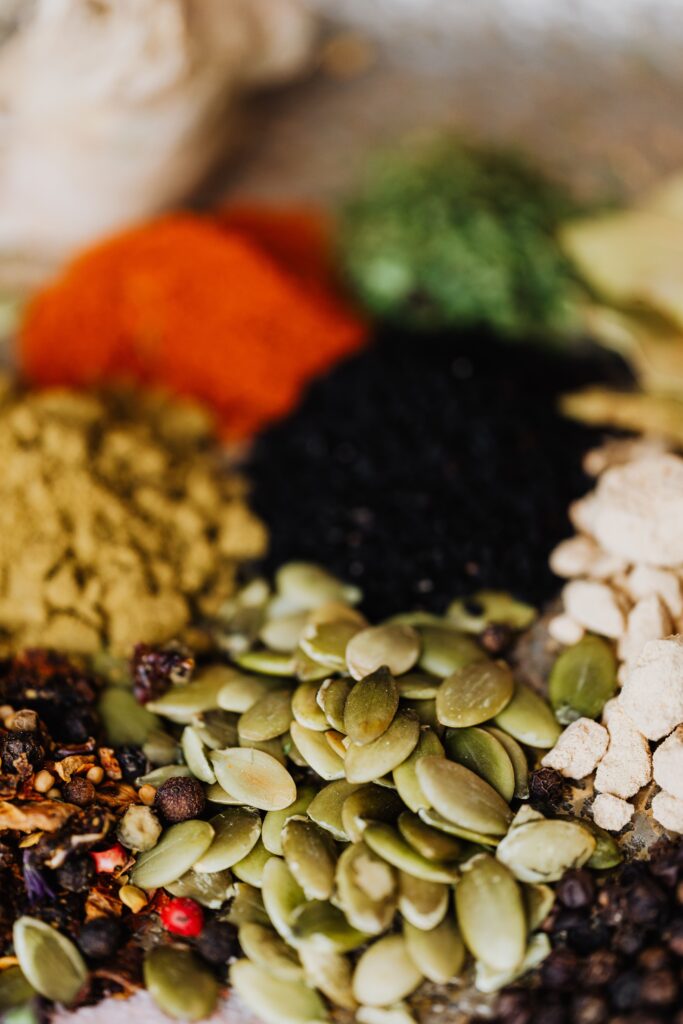
A science-backed guide to the tiny powerhouses hiding in your pantry
If you’ve spent any time in the wellness space, you’ve probably heard seeds called a “superfood.” It’s a term that gets thrown around so often it starts to lose meaning. So let’s set the marketing language aside and ask a more useful question: what does the actual research say about seed source nutrition, and how can you use that information to build a sustainable, whole-food foundation for your health?
This guide walks through the four most-studied seeds — flaxseed, chia, pumpkin, and sunflower — and what peer-reviewed and clinical research has found about their role in metabolic health, heart health, blood sugar regulation, and long-term wellness. This is educational content, not medical advice, and it’s not a substitute for guidance from your physician or a registered dietitian — especially if you’re managing a health condition or taking medication.
Why Seeds Deserve a Closer Look
Seeds are essentially concentrated nutrition. Because they’re designed by nature to carry everything a new plant needs to germinate, they pack fiber, healthy fats, protein, vitamins, minerals, and plant compounds called phytochemicals into a very small package. A comprehensive review of edible seeds published in the scientific literature notes that seeds such as pumpkin, flax, sesame, chia, and melon are rich in dietary fiber, high-quality proteins, unsaturated fatty acids including omega-3s, vitamins E, C, and K, and minerals such as magnesium, zinc, potassium, and iron, along with polyphenols and carotenoids that contribute antioxidant and anti-inflammatory properties.
That density is exactly why seeds are such an efficient addition to a whole-food, sustainable eating pattern. You don’t need a large serving to get a meaningful nutritional contribution, which makes seeds a practical tool for people trying to build better habits without overhauling their entire diet overnight.
Let’s break down what the research shows for each seed.
Flaxseed: The Most-Researched Seed for Heart and Hormone Health
Flaxseed (Linum usitatissimum) has one of the deepest research histories of any seed, largely because of two components: its exceptionally high alpha-linolenic acid (ALA) omega-3 content, and a class of plant compounds called lignans.
Heart health. According to information from the USDA Agricultural Research Service, flaxseed and flaxseed oil are rich sources of ALA, an omega-3 fatty acid associated with cardiovascular benefits, and each tablespoon of ground flaxseed contains roughly 1.8 grams of omega-3 fatty acids. A large 2021 review pooling data from 34 studies associated higher ALA intake with a reduced risk of death from heart disease, and a 2021 randomized clinical trial found that 30 grams of flaxseed daily over 12 weeks had measurable effects on blood pressure compared with placebo.
Blood sugar support. One of the more rigorous studies in this space was a randomized, double-blind, placebo-controlled crossover trial conducted in China, which gave type 2 diabetic patients a flaxseed-derived lignan supplement (360 mg per day) for 12 weeks. The researchers found the lignan supplement produced a statistically significant improvement in HbA1c, a key marker of long-term blood sugar control, compared with placebo. A separate 2018 review of 25 studies found that whole flaxseed consumption was associated with improvements in blood sugar markers and insulin resistance — an effect researchers attribute largely to flaxseed’s soluble fiber content, which slows digestion and blunts blood sugar spikes.
Hormonal and cellular research. Flaxseed lignans have also been studied for their role in estrogen metabolism. Research summarized by nutrition-focused medical resources notes that small clinical trials have found that daily ground flaxseed intake may influence levels of certain estrogen forms in both premenopausal and postmenopausal women, and that populations with higher dietary lignan intake tend to show lower rates of certain hormone-related cancers — though researchers are careful to note that lifestyle and genetic factors are also at play, and that larger, longer-term studies are still needed before drawing firm conclusions.
The practical takeaway: Ground flaxseed (whole flaxseed passes through the digestive system largely intact) is one of the most well-evidenced additions you can make to smoothies, oatmeal, or baked goods if your goal is more fiber, more plant-based omega-3s, and a gentle metabolic assist.
Chia Seeds: Small Seed, Big Research Interest in Satiety and Metabolic Health
Chia (Salvia hispanica) has exploded in popularity over the last decade, and the research has followed. What makes chia nutritionally unique is its mucilage — a soluble fiber that forms a gel when combined with liquid.
Satiety and appetite regulation. According to Harvard’s Nutrition Source, a two-tablespoon (28-gram) serving of chia seeds delivers about 140 calories, 4 grams of protein, and 11 grams of fiber, along with all nine essential amino acids, making it a rare plant-based complete protein. That fiber-and-protein combination is central to chia’s most-studied effect: satiety. A randomized controlled trial found that chia-added yogurt reduced short-term food intake and increased feelings of fullness compared to a control. A more recent systematic review and meta-analysis of randomized controlled trials examined chia supplementation in overweight individuals and found consistent associations between chia intake and improved cardiometabolic markers, attributing much of the effect to chia’s gel-forming fiber slowing gastric emptying and blunting post-meal blood sugar spikes.
Cardiometabolic research. A comprehensive 2026 review in the journal Cogent Food & Agriculture concluded that chia’s combination of alpha-linolenic acid, complete protein, and soluble mucilage fiber supports improved glycemic control, a healthier gut microbiome through prebiotic effects, and better lipid metabolism through its polyunsaturated fat and antioxidant content.
An honest caveat. It’s worth noting that researchers reviewing the chia literature — including scientists writing for the American Oil Chemists’ Society — point out that clinical trials on chia are still relatively few, often small, and produce inconsistent results across different study designs. This doesn’t mean the nutritional value isn’t real; chia is unambiguously a concentrated source of omega-3s, fiber, and protein. It simply means that some of the more specific claims (like significant weight loss from chia alone) are still being studied and shouldn’t be oversold.
The practical takeaway: Chia is an excellent tool for building satiety into meals — think chia pudding, added to smoothies, or stirred into yogurt — particularly for people trying to manage portion sizes without feeling deprived.
Pumpkin Seeds: An Underrated Mineral Powerhouse
Pumpkin seeds (pepitas) don’t get the same spotlight as flax or chia, but the mineral research is compelling.
Magnesium and zinc. A comparative nutritional analysis of nuts and seeds found that pumpkin seeds were among the richest sources of magnesium, with a single 28-gram portion contributing over 30% of the recommended daily value. Pumpkin seeds are also recognized by health organizations as a strong source of dietary zinc, a mineral tied to immune function, cellular metabolism, and wound healing. Research into pumpkin seed protein has also identified it as a source of zinc-binding peptides that may support zinc bioavailability, since zinc from many plant foods is otherwise bound by phytates and poorly absorbed.
Amino acid and inflammation research. Reviews of pumpkin seed nutrition point out that the seeds are a strong source of essential amino acids and contain antioxidant compounds like tocopherols and carotenoids, which researchers associate with anti-inflammatory activity and general cardiovascular support.
The practical takeaway: If your goal is to close common micronutrient gaps — particularly magnesium and zinc, two minerals many adults fall short on — pumpkin seeds are one of the most efficient whole-food sources available.
Sunflower Seeds: A Vitamin E and Healthy Fat Source
Sunflower seeds round out the seed lineup with a nutrient profile centered on vitamin E, unsaturated fats, and a broad mineral spread.
Vitamin E and antioxidant status. According to nutrition resources reviewed by Michigan State University Extension, sunflower seeds are a strong source of unsaturated fats along with magnesium, copper, manganese, and notably high levels of vitamin E — a fat-soluble antioxidant that plays a role in protecting cells from oxidative stress.
Mineral density. A side-by-side nutritional comparison from Bob’s Red Mill highlights that a three-tablespoon serving of sunflower seeds provides roughly 9 grams of protein and meaningful amounts of zinc, magnesium, copper, and selenium — minerals tied to immune function and blood sugar regulation. Because they’re calorie-dense, sunflower seeds work best as a topping or mix-in rather than an unlimited snack.
The practical takeaway: A tablespoon of sunflower seeds on a salad or in a trail mix is a simple, evidence-supported way to add healthy fats, vitamin E, and trace minerals to your day.
Building a Seed-Based Nutrition Routine (Without Overcomplicating It)
The research is consistent on one point: seeds work best as part of a varied, whole-food dietary pattern — not as a single magic ingredient. Here’s a simple, sustainable framework:
- Rotate, don’t rely on one seed. Each seed brings a different nutritional strength — flax for omega-3s and lignans, chia for fiber and satiety, pumpkin for magnesium and zinc, sunflower for vitamin E. Rotating them gives you broader micronutrient coverage.
- Grind flaxseed before eating it. Whole flaxseed largely passes through digestion undigested. Ground flax (or flax meal) makes its nutrients bioavailable.
- Hydrate chia before eating it in seed form, or add it dry to baked goods. The gel-forming mucilage is where much of its satiety benefit comes from.
- Think in tablespoons, not cups. Seeds are calorie-dense. A tablespoon or two per serving is enough to get meaningful benefits without overloading your daily calorie intake.
- Pair seeds with other whole foods. The research on fiber, satiety, and blood sugar control is strongest when seeds are part of a broader pattern rich in vegetables, fruit, lean protein, and whole grains — not a stand-alone fix.
A Note on Claims and Realistic Expectations
It’s worth being direct about something the research itself is honest about: seeds are a valuable, nutrient-dense addition to a healthy lifestyle, but no single food — seed or otherwise — is a cure, a guaranteed weight-loss solution, or a replacement for medical care. Much of the most promising research (particularly around lignans and hormone-related outcomes, or chia and metabolic markers) comes from small clinical trials or short study periods, and researchers themselves consistently call for larger, longer-term studies before drawing firm conclusions. The honest, sustainable approach is to treat seeds as one supportive piece of a broader pattern of consistent, whole-food habits — not a shortcut.
The Bigger Picture: Consistency Over Quick Fixes
This is really the heart of sustainable nutrition: small, evidence-informed choices, repeated consistently, compound into real results over time. Adding a tablespoon of ground flaxseed to your morning oatmeal, a scoop of chia to your smoothie, or a handful of pumpkin seeds to your salad won’t transform your health overnight — but layered into a consistent routine, these are exactly the kinds of habits that research supports as part of a long-term, whole-food approach to wellness.
References
- USDA Agricultural Research Service. “The Benefits of Flaxseed.” USDA ARS News, 2012.
- Healthline. “8 Flaxseed Health Benefits, Precautions, How to Eat Them.” Reviewed 2023.
- Hutchins, A.M., et al. “Effects of a Flaxseed-Derived Lignan Supplement in Type 2 Diabetic Patients: A Randomized, Double-Blind, Cross-Over Trial.” PLOS ONE, via PubMed Central (PMC2048577).
- Ubie Health Doctor’s Note. “Why Doctors Study Flaxseed Lignans for Preventive Health.” 2026.
- Harvard T.H. Chan School of Public Health, The Nutrition Source. “Chia Seeds.” Reviewed 2024.
- “Effects of Chia Seed (Salvia hispanica L.) Supplementation on Cardiometabolic Health in Overweight Subjects: A Systematic Review and Meta-Analysis of RCTs.” PMC11406937.
- “Chia Seeds: A Nutrient-Dense Functional Food for Health and Nutrition.” Cogent Food & Agriculture, 2026.
- AOCS (American Oil Chemists’ Society). “Chia: Superfood or Superfad?” 2026.
- “Similarities and Differences in the Nutritional Composition of Nuts and Seeds in Serbia.” PMC9523690.
- “Nutritional and Health Potential of Edible Seeds: Micronutrient Bioavailability and Mechanistic Insights.” PMC12852966.
- “Effect of Enzymatic Hydrolysis on the Zinc Binding Capacity… of Peptides Derived From Pumpkin (Cucurbita pepo L.) Seeds.” PMC8044297.
- Viva! Health. “Sunflower, Pumpkin and Sesame Seeds.” 2025.
- Michigan State University Extension (MSU CANR). “Seeds Are Healthy Sources of Fiber.”
- Bob’s Red Mill Natural Foods. “Pumpkin Seeds vs. Sunflower Seeds.” 2025.
- Healthline. “6 Super Healthy Seeds You Should Eat.” 2025.
This article is for educational purposes only and does not constitute medical advice. Always consult a qualified healthcare provider before making significant changes to your diet, especially if you have an existing health condition or are taking medication.